Run the generated Blog
Follow the same route shown in the product proof and inspect its visible behavior.
Open live routeOpen-source TypeScript · for existing React apps
BTST is an open-source TypeScript system that adds routes, backend behavior, data models, and customizable UI to the React application you already own.
Install a released plugin when your product needs a substantial feature. Start with Blog, then add more only when they are useful. Your app, data, deployment, and ejected UI stay yours.

A full-stack plugin can include:
Payload varies by plugin. Intentional backend-only, client-only, and companion plugins stay within their real boundary.
One plugin, a complete boundary
BTST is an open-source TypeScript system. Its plugins are installable packages for adding substantial features to an app you already run. It is not a hosted control plane, an app starter, or a UI-only component kit.
npx @btst/codegen@4.5.1 init \
  --framework nextjs \
  --adapter memory \
  --plugins blog
This quickstart uses the in-memory adapter for local evaluation. Choose a versioned database adapter before treating generated data as durable.
Follow the complete quickstartThe codegen writes the selected plugin integration into your existing application.
Inspect the data, server, web, and UI boundaries that plugin actually provides.
Open the generated Blog route at /pages/blog, then keep, fork, or replace each layer.
Product proof
These are captured from the generated applications—not concept art. Blog is the canonical end-to-end proof; the other screens show how plugin boundaries can differ.


Ownership boundary
BTST installs code and packages into your React application. There is no hosted control plane between your users and the feature. You can inspect, fork, or replace each boundary as the product evolves.
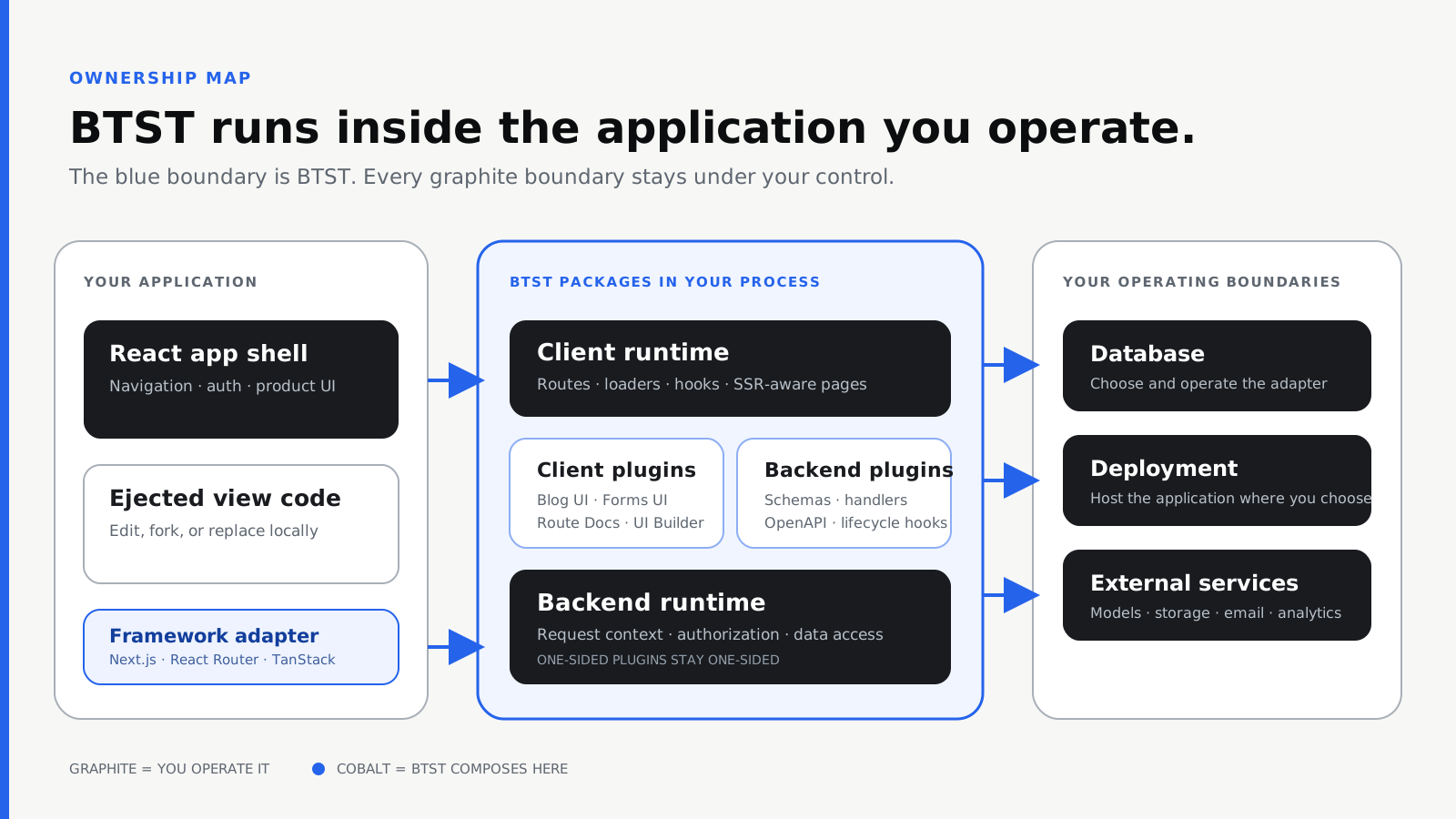
Stack fit
BTST keeps framework integration explicit. Pick a maintained web integration and a versioned data adapter; each plugin then declares the boundary it provides.
Maintained App Router integration
Maintained framework-mode integration
Maintained full-stack integration
Prisma, Drizzle, and Kysely have versioned adapter packages. MongoDB support is intentionally narrower; the in-memory adapter is for evaluation and tests, not durable data.
BTST exposes boundaries for additional frameworks and adapters. That extensibility is separate from the integrations the project maintains and tests today.
Released catalog
Every plugin below has a released package and a published implementation page. Topology labels describe what the plugin actually installs.
Publish and manage a content section inside the React application you already run.
Add a streaming conversation surface while choosing the model, access policy, and operating limits yourself.
Define structured content in TypeScript and give operators generated forms for managing it.
Let operators design forms visually, publish them inside your app, and collect validated submissions.
Let operators compose pages visually, store the layout through CMS, and render it on routes you own.
Requires CMS
Add boards, columns, tasks, priorities, and drag-and-drop workflows inside your product.
Attach threaded discussion and moderation to a resource your application already owns.
Upload, organize, register, and reuse media through a library that runs with your storage.
Generate an explorable reference for the client routes already registered in your BTST stack.
Expose an OpenAPI 3.1 contract for registered BTST routes and, when useful, an interactive API reference.
Add auth and account routes to a BTST client stack that already has a Better Auth backend.
Requires Better Auth
Compare implementation notes, payloads, and setup guidance in the complete plugin directory.
Open directoryVerify the claim
Follow the same route shown in the product proof and inspect its visible behavior.
Open live routeInspect packages, examples, issue history, and the implementation behind each boundary.
Open GitHub (opens in a new tab)Verify package versions and project changes before adopting a feature.
Review releases (opens in a new tab)CI generates fresh projects and runs codegen E2E across Next.js, React Router v7, and TanStack Start.
Review CI runs (opens in a new tab)Use, modify, and distribute the open-source code under the repository license.
Read the license (opens in a new tab)Start with the result
Blog is the clearest end-to-end example of the payload. Open it live, then follow the pinned quickstart when you are ready to inspect the integration in your own repository.
Read the source (opens in a new tab)